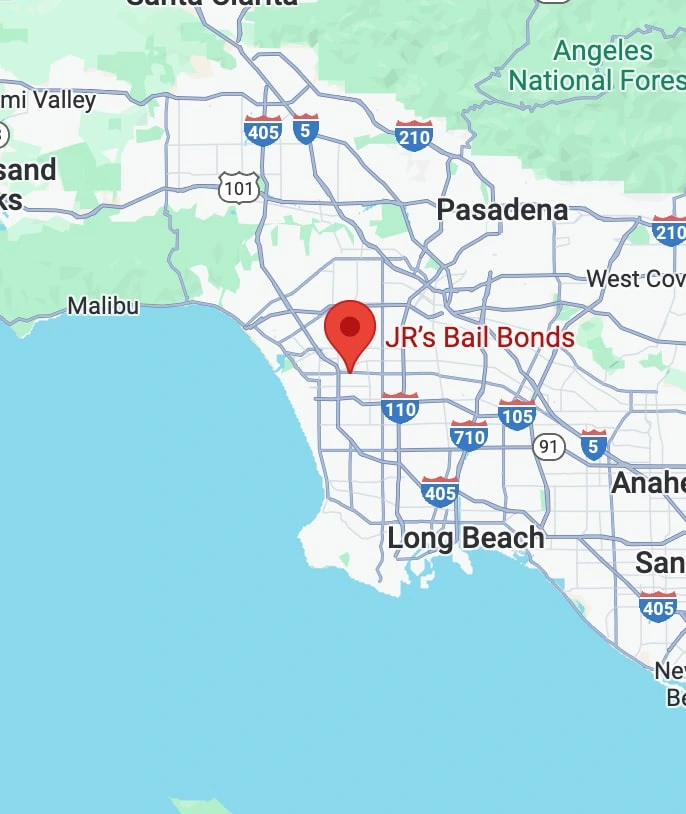
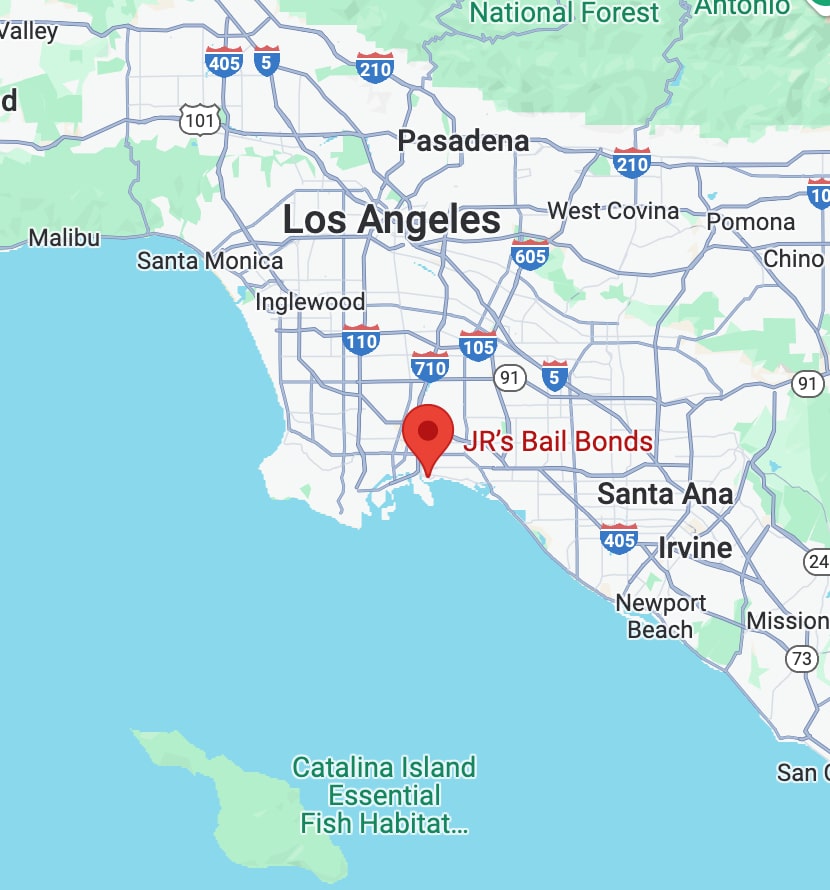
JR’s Bail Bonds Anaheim – 24/7 Bail Bond Services
When you receive a late-night call informing you that a loved one is in custody, it can suddenly thrust you into the overwhelming world of the legal system. A judge could issue bail, which places a price tag on freedom that, more often than not, a family cannot meet on short notice. This is the agonizing moment when time truly becomes a financial concern. Your loved one cannot work, cannot prepare his/her defense, and has to remain in jail unless you secure his/her release. That is where a reliable bail bond service steps in. As you will see from the information below, bail bondsmen play a crucial financial role, providing the court with the necessary guarantee to secure a release from custody.
When you need help, you deserve it fast, with empathy and professionalism. If you or someone you know needs Dana Point bail bonds services, give JR’s Bail Bonds a call right away. We are available anytime, day or night.
Factors Influencing a Judge’s Bail Decision
The bail hearing will take place at the defendant’s first appearance in court (the arraignment). During the bail hearing, a judge will decide whether the defendant will be released pending trial and, if so, on what terms, whether financial or non-financial. This hearing is not about guilt or innocence, but rather about weighing two critical principles:
- The presumption of innocence
- Ensuring the defendant’s appearance in court
A prosecutor usually requests high bail or pretrial detention when the charges are serious. The judge then exercises broad judicial discretion and considers various essential factors to determine the bail amount, namely:
- The nature of the crime (non-violent misdemeanor vs serious felony) — Typically, the bail amount is higher for more serious offenses
- Whether the accused has a criminal record — The more serious the criminal record, the higher the amount the accused will need to pay as bail.
- Ties to the community — Assuming the defendant has strong ties, like stable employment, owning property, and having family nearby, they are less likely to flee.
- Threat to the public — The judge weighs whether the defendant poses a risk to harm the victim, witness, or the community if released.
This is where the defense attorney is most vital. An attorney can dispute the prosecutor’s claims based on mitigating circumstances. They might seek a lower cash bail or, preferably, Own Recognizance (OR) release. An OR release means that the defendant is released from custody on a written promise to appear in court, with no additional bail required.
To argue for OR or low bail, the attorney will focus on the client’s stable address, employment record, voluntary surrender, or medical issue. If the judge sets a substantial cash bail, this decision directly affects the family’s needs. A hefty cash bail generally means you have to call the Dana Point bail bondsmen. They will pay the full amount of bail to the court for a fee. Thus, the bail bondsmen turn an overwhelming legal crisis into a manageable financial matter for the family.
What are Your Options If You Do Not Have the Money to Post Bail
Judges may set bail at a high amount to ensure that a person will appear in court. However, many do not have the money for the bail bond company’s 10% premium and cash bail. Families already under stress must find solutions that offer relief without causing them financial distress.
Because they specialize in risk assessment and immediate release, Dana Point bail bondsmen can offer more flexible payment structures than traditional lenders. These options prioritize stability and commitment over credit history. These options include:
- Low initial payment plans — Families with stable incomes or a qualified co-signer can secure release by paying as low as 1% to 5% of the premium upfront. The family can initiate the process without incurring significant upfront costs.
- Flexible installment schedules — After that, the balance premium of 10 percent is paid off through scheduled installments (weekly, bi-weekly, or monthly). These payment plans are often interest-free and tailored to align with the co-signer’s or defendant’s pay schedule. The plan cannot last longer than the court case against the defendant.
- Job is your credit — Many bail bond companies do not rely on perfect credit scores. They often prioritize the stable employment and verifiable income of the defendant or, more likely, the co-signer (indemnitor) in their considerations. They believe that a regular paycheck is the best assurance of regular payments.
Bail bondsmen often require collateral when the bail amount is relatively high or the risk of financial loss to the company is significant. In particular, when the 10% premium is impossible or the high elements make even a flexible 10% premium impossible, collateral will be required. Collateral refers to a valuable item pledged to the bail bondsman, which they can seize and sell if the defendant fails to appear in court. Some of the assets bail bondsmen accept as collateral include:
- Real estate, which requires a deed or lien on property, is often the most common collateral for high-dollar bonds
- Vehicles, like cars, trucks, or boats
- Expensive jewelry, precious metals, or financial instruments.
Crucially, in many standard or lower-risk cases, bail bond companies may offer no-collateral bail bonds, especially when the defendant has a financially stable co-signer and a low flight risk.
By offering these unique financing and collateral options, businesses that provide Dana Point bail bonds can guarantee that either the premium or the collateral required will never be the obstacle that keeps a defendant from preparing for trial at home rather than in custody.
Working With a Dana Point Bail Bondsman
If the judge sets bail at a very high and arguably unaffordable figure, then you can count on the bail bondsman to step in at once. Once the bail bondsman has posted bond on behalf of the defendant, the defendant is released from custody, and the court is assured that the defendant will appear as required. This initial action transfers the court’s risk from the defendant to a professional licensed bail bondsman.
To be clear, a bondsman gives the court a legally binding surety bond. The bond promises that the bail bondsman will pay the full bail amount if the defendant fails to appear and the bond is forfeited. To procure this service, the client (or other payor) pays a non-refundable fee, usually 10% of the bail amount. At the same time, the bail bondsman handles all complex and time-critical paperwork. An experienced local Dana Point bail bondsman works directly with the jail to facilitate the bureaucratic process, ensuring the release process is accurate and completed without delay.
The bondsman not only guarantees the defendant’s release but also bears the associated risks. They must ensure the defendant shows up for all their court dates. Therefore, the bail bondsman serves as an advocate for the courts, contacting and reminding the defendant of upcoming court dates. Due to this financial incentive, the bondsman must ensure the defendant is familiar with the conditions of his/her release, thus protecting the court and the client.
A reputable bail bondsman who is available 24/7 will ensure the process begins immediately, regardless of the time of day or day of the week. This includes nights, weekends, and holidays. This dramatically reduces the time your loved one will spend in jail. A local Dana Point bail bondsman leverages relationships and familiarity with Orange County procedures to expedite the bail posting even further. They offer flexible financing and low down payment plans, making freedom accessible even when family resources are strained.
Understanding Your Bail Bond Contract
The bail bond agreement (Indemnity Agreement) establishes a clear three-party relationship among the bondsman, the defendant, and the indemnitor (co-signer). The bail bondsman first accepts responsibility for the total bail amount with the court, thereby guaranteeing the defendant’s appearance. In exchange for this monetary coverage, the indemnitor co-signs the contract, thereby accepting total financial responsibility for any loss suffered by the bondsman in the event of a bond forfeiture ordered by the court. By signing this, the risk is shifted from the bail bondsman to the indemnitor. The indemnitor is now solely responsible for making sure the defendant fulfills all court obligations.
Furthermore, the contract outlines all financial terms, beginning with the non-refundable premium payment, which represents the bondman’s fee earned for the professional service. It clearly lays out:
- When the remaining premium balance is due
- The acceptable installment payment and when it will be received
- The penalty for late payments or default
- The collateral being pledged is typically for higher-risk cases or those involving a large bond amount. This could be a lien on real estate, titles to vehicles, high-end jewelry, or other similar property. It gives the bail bondsman the right to liquidate collateral to recover the full amount of the bond if the defendant fails to meet their obligations.
Most importantly, the fine print specifies how the defendant must act and when the bond can be released. The defendant must appear for every court date required and follow the restrictions imposed by the judge at the bail hearing. Until the court issues a discharge order on the bond, the bail bond will remain in force, and the bondsman will remain liable for any financial obligations. Courts usually discharge the bail bond only when the matter is resolved by way of dismissal, conviction, or acquittal.
Finally, the contract authorizes the bondsman to locate, apprehend, and surrender the defendant back into custody if they violate any term, thus protecting the indemnitor and bondsman from financial loss before the court orders forfeiture..
Defendant’s Obligations and Restrictions
Being released on a bail bond does not mean that you are not guilty. It is a temporary freedom, which, as a condition, is put on the defendant that he/she should comply with. The primary goal of these obligations is to promote both judicial compliance and public safety throughout the case. When a defendant signs the documents, he/she accepts legal obligations that the court and the bail bondsman (who financially guaranteed the defendant’s release) enforce.
Defendant’s few non-negotiable obligations revolve around respect for the process. They include:
- Mandatory court appearances — These are essential and the most critical requirement. The defendant shall attend on time every scheduled court date, including arraignments, pretrial hearings, motions, and trial. If he/she fails to appear, the judge will issue a bench warrant for their re-arrest, and the bond will be forfeited.
- Contact with the bail bondsman — The defendant and indemnitor must maintain regular contact with the bail bondsman, providing updates on their contact information and confirming upcoming court dates. The bail bondsman incentivizes appearance with reminders to avoid forfeiture.
- The judge may order the accused to follow specific conditions depending on the type of alleged crime. These commonly include:
- Curfew — The defendant must be home at night and cannot leave the house
- Drug/alcohol testing — The testing shall be administered from time to time, especially in cases involving a DUI or substance abuse
- Electronic monitoring — Wearing an electronic ankle monitor to track location (GPS) or ensure curfew compliance.
While out on bail, the defendant’s constitutional freedoms are temporarily limited to minimize risk:
- Abstaining from illegal activities — The defendant must not commit any new local, state, or federal crime. Being arrested, even for a minor offense, can violate bail conditions and result in the immediate revocation of the bond.
- Travel restrictions — Unless otherwise ordered in writing by the court, the defendants typically have their travel limited to Orange County or the state of California. International travel is nearly always forbidden, and the defendant could be required to surrender their passport.
- No-contact orders — When there is a domestic dispute, an assault allegation, or a concern about witness intimidation, the court will issue a protective order or a no-contact order. You must not directly or indirectly (by yourself, by phone, or by social media) communicate with the alleged victim or any witnesses. Failing to follow this will be a crime and a breach of bail terms.
If you violate any terms, like missing a court date, failing a drug test, or being arrested again, you may face further consequences, including arrest and forfeiture of your bond. If the defendant fails to comply with the conditions outlined, the entire bond will be forfeited, and a judge will issue a warrant. The Dana Point bail bonds company will then be required to engage a recovery agent (also known as a bounty hunter) to locate and apprehend the defendant. At this point, the indemnitor is liable for the full amount of the bond, not simply the premium.
Bail Forfeiture and Reclamation
When a defendant fails to appear (FTA), the bail process will immediately collapse. When this violation is committed, a forfeiture of bail occurs, triggering the court’s process to take the entire amount of the financial guarantee posted by the bondsman. So, the judge immediately orders the police to arrest the defendant again. Thus, law enforcement will begin searching for the defendant to take him/her into custody once again.
After the warrant is issued and a forfeiture has been declared, the court notifies the bail bondsman that they have a certain amount of time, as prescribed by law (often 180 days), to rectify the situation. Because he/she has a strong financial incentive to avoid a permanent loss, the bail bondsman’s first consideration is the quick identification and surrender of the defendant. Therefore, the bondsman or professional recovery agents initiate an aggressive, proactive search focused on bond reclamation. The original Indemnity Agreement grants the bail bondsman the legal right to locate, apprehend, and turn the defendant over to jail.
When the bondsman completes this process and returns the defendant to the court within the grace period, the court typically grants an order to reinstate the bond. This successful recovery may also be called reclamation or exoneration. The forfeiture order is cancelled, collection efforts cease, and the active arrest warrant is closed. This action effectively saves both the bondsman and the indemnitor from the massive financial loss of the full bail amount.
If this is unsuccessful, the grace period will eventually run out, and the defendant will be returned to custody. At this point, it is a permanent forfeiture: the court collects the full bond amount from the bondsman, and the risk officially materializes. As provided in the Indemnity Agreement, the bondsman promptly sues the indemnitor for the entire loss. Usually, the seizure and sale of the collateral previously provided are executed to effect this recovery.
Dana Point Jail and Court Information
Harbor Justice Center – Newport Beach
4601 Jamboree Road, Newport Beach, CA 92660-2595
Orange County Sheriff’s Department (OCSD)
550 N. Flower Street, Santa Ana, CA 92703
Find a Bail Bondsman near Me
Bail is the first step to getting your loved one back to their life and preparing for a solid defense outside of jail. From the information above, you can now see how the bail process starts from a judge’s high-stakes decision to a binding contract that requires the defendant to comply strictly or face forfeiture. When you understand the risk and fine print, you can make informed decisions.
When this confusing and challenging crisis arises, call JR’s Bail Bonds immediately. We offer 24/7 professional support and flexible financing to help you navigate the Dana Point bail system quickly and efficiently, turning a daunting crisis into a prompt release. Contact us at 888-577-2245.