
A late-night arrest brings one urgent question about money. Bail can be set at thousands or tens of thousands of dollars. Most families cannot pay that full amount in cash. Understanding bail bonds cost in California removes some of that fear.
A bail bond usually costs a set percentage of the bail. That percentage, the premium, follows rules set by state regulators. Knowing bail bonds cost in California helps you plan payments fast. Clear numbers replace guesswork when time and money are tight.
Quick Answer: Bail bonds cost in California is standard at 10% of the bail amount. This premium is how much a bail bondsman charges to guarantee court appearance. A $20,000 bail bond costs about $2,000. The premium is regulated by the California Department of Insurance and is non-refundable.
How Much Do Bail Bonds Cost in California?
A bail bondsman in California typically charges 10% of the bail amount. This upfront fee is called the premium. For $10,000 bail, the premium is generally $1,000. That percentage forms the core of bail bonds cost in California. The rate stays the same whether bail is high or low.
So how much does a bail bondsman charge beyond that premium? Reputable agents charge only the state-approved rate. They add no hidden processing or paperwork fees. How much a bail bondsman charges should always be stated in writing. Request the full cost, and review how bail bonds work, before signing.
Is the Bail Bond Premium Refundable?
The bail bond premium is non-refundable once bond is posted. You pay for a service, not a court deposit. Even if charges are dropped, the 10% stays with the agent. This answers whether the bail premium is refundable: it is not.
Is the Bail Bond Rate Regulated in California?
Bail bond premium rates in California are regulated by state law. The California Department of Insurance approves the rate each surety files. Most sureties file a 10% rate for standard bonds. This keeps the bail bond premium in California consistent statewide. Licensed agents cannot legally exceed the approved rate.
Because the rate is filed, bail bond fee regulation in California limits deep discounts. An agent cannot charge above the approved premium. Some offer legal discounts for military or union members. The bail bond premium in California cannot include surprise charges. Always confirm the agent holds a valid state license.
Negotiation on the premium itself is therefore very limited. The filed rate protects families from price gouging during a crisis. It also means quotes should match across licensed agents. Large differences in a quoted premium signal a warning. Verify any agent through the state licensing database first.
Bail Bond Cost Examples by Bail Amount
Bail bonds cost in California scales directly with the bail amount. Multiply the bail by 10% to estimate the premium. Higher bail means a higher premium, at the same rate. The table below lists common bail amounts and premiums. These figures assume the standard surety bond rate.
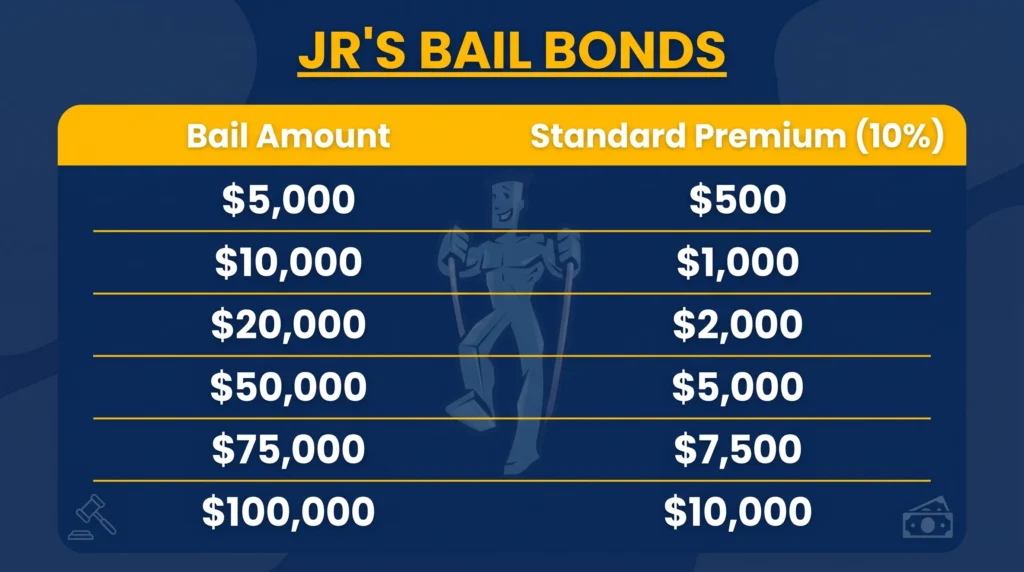
A $50,000 bail bond costs about $5,000 in premium. A $100,000 bail bond costs roughly $10,000. Payment plans can spread this premium over several months. Actual bail bonds cost in California depends on the judge’s figure. Collateral may reduce the effective out-of-pocket amount.
These examples cover the premium only, not other costs. Collateral, court fees, and travel can affect the total. A written quote should itemize every charge clearly. The premium remains the largest single cost for most families. Ask the agent to confirm the final number before paying.
What Are the Types of Bail Bonds and Their Costs?
Bail bonds cost in California varies by the type of bond needed. A standard surety bond covers most county charges. Federal and immigration bonds carry higher premiums. Each type sets a different collateral expectation. The table below compares common bond types and costs.
| Bond Type | Typical Premium | Notes |
|---|---|---|
| Surety (state) | 10% | Most common for county jail charges |
| Cash bond | 100% to court | Full amount paid directly, refundable |
| Property bond | Varies | Real estate pledged as collateral |
| Federal bond | 15% | Higher risk, added vetting |
| Immigration bond | 15–20% | Requires strong collateral |
Federal bonds often carry a 15% premium. This reflects the added risk in federal cases. Immigration bonds can reach 15% to 20% with strong collateral. A property bond pledges real estate instead of cash. Cash bonds require the full amount paid to the court.
Choosing the right bond type depends on the case and court. County charges almost always use a standard surety bond. Federal cases require a licensed federal bail agent. Immigration holds are handled through immigration bond specialists. Matching the bond type to the case prevents costly delays.
What Changes the Price of a Bail Bond?
Several factors that affect bail bond cost begin before an agent is hired. A judge sets bail using the county California bail schedule. This schedule lists standard bail amounts by charge. A higher bail figure raises the 10% premium owed. Understanding these factors clarifies bail bonds cost in California.
Key factors include:
- Total bail amount set by the judge
- Severity and type of the criminal charge
- The defendant’s criminal and court-appearance history
- Perceived flight risk and community ties
- Type of bond required, such as surety or federal
- County where the bail is posted
Charge severity is a major factor that affects bail bond cost. In a felony vs misdemeanor bail comparison, felony bail runs higher. A felony DUI can carry bail of $50,000 or more. Prior failures to appear push bail and premium upward. Strong community ties can lower the bail a judge sets.
The county where bail is posted also matters. Some counties set higher schedule amounts for the same charge. Los Angeles County bail figures often exceed rural county amounts. This regional gap widens the final premium you pay. Location is a quiet but real factor that affects bail bond cost.
How Do You Pay for a Bail Bond in California?
Most families cannot pay the full premium at once. Bail bond payment plans in California split the cost into installments. A down payment secures release, with the balance financed. Agents may accept cards, transfers, or signed agreements. These plans make bail bonds cost in California more manageable.
The indemnitor signs a contract accepting financial responsibility. If the defendant misses court, the indemnitor may owe the full bail. This is why agents verify income and collateral first. A stable co-signer often removes the need for property collateral. Honesty about finances helps the agent build a workable plan.
Are There Payment Plans for Bail Bonds?
Bail bond payment plans in California are common for larger premiums. Many agents advertise low or zero down payment options. The bail bond down payment often ranges from 0% to 20%. The remaining premium follows a written schedule. Missing payments can violate the financing agreement.
To arrange a bail bond payment plan:
- Contact a licensed bail agent with the booking details.
- Confirm the bail amount and total premium owed.
- Agree on a down payment and installment schedule.
- Provide collateral if the agent requires it.
- Sign the indemnitor agreement and post bond.
- Receive confirmation once the defendant is released.
What Is Bail Bond Collateral?
Bail bond collateral is an asset pledged to secure the bond. Common collateral includes real estate, vehicles, or jewelry. Collateral is returned once the case closes and premium is paid. Small premiums often need only a co-signer, not collateral. The co-signer, or indemnitor, guarantees the defendant appears in court.
Bail Bond vs Cash Bail: Which Costs Less?
In a cash bail vs bail bond choice, upfront cost differs sharply. Cash bail requires the full bail amount paid to court. A bail bond requires only the 10% premium. For $30,000 bail, that is $30,000 versus about $3,000. The table below compares both options directly.
| Factor | Cash Bail | Bail Bond |
|---|---|---|
| Upfront cost | 100% of bail | 10% premium |
| Refundable | Yes, after case | No |
| Paid to | The court | Bail agent |
Cash bail is refundable after the case, minus court fees. The bail bond premium is never returned. The cash bail vs bail bond decision depends on available funds. If you can’t afford bail, a judge may grant release. Release on own recognizance carries no premium cost.
Neither option changes the underlying bail set by the judge. Cash bail ties up funds until the case fully closes. A bail bond frees that cash for legal fees and living costs. Most families choose a bond to preserve limited savings. The best choice depends on total funds and case length.
Conclusion
Bail bonds cost in California follows a clear, regulated structure. The standard 10% premium applies to most surety bonds. Federal and immigration bonds carry higher rates and collateral. Comparing cash bail vs bail bond points to the affordable path. Knowing these numbers turns a stressful arrest into a plan.